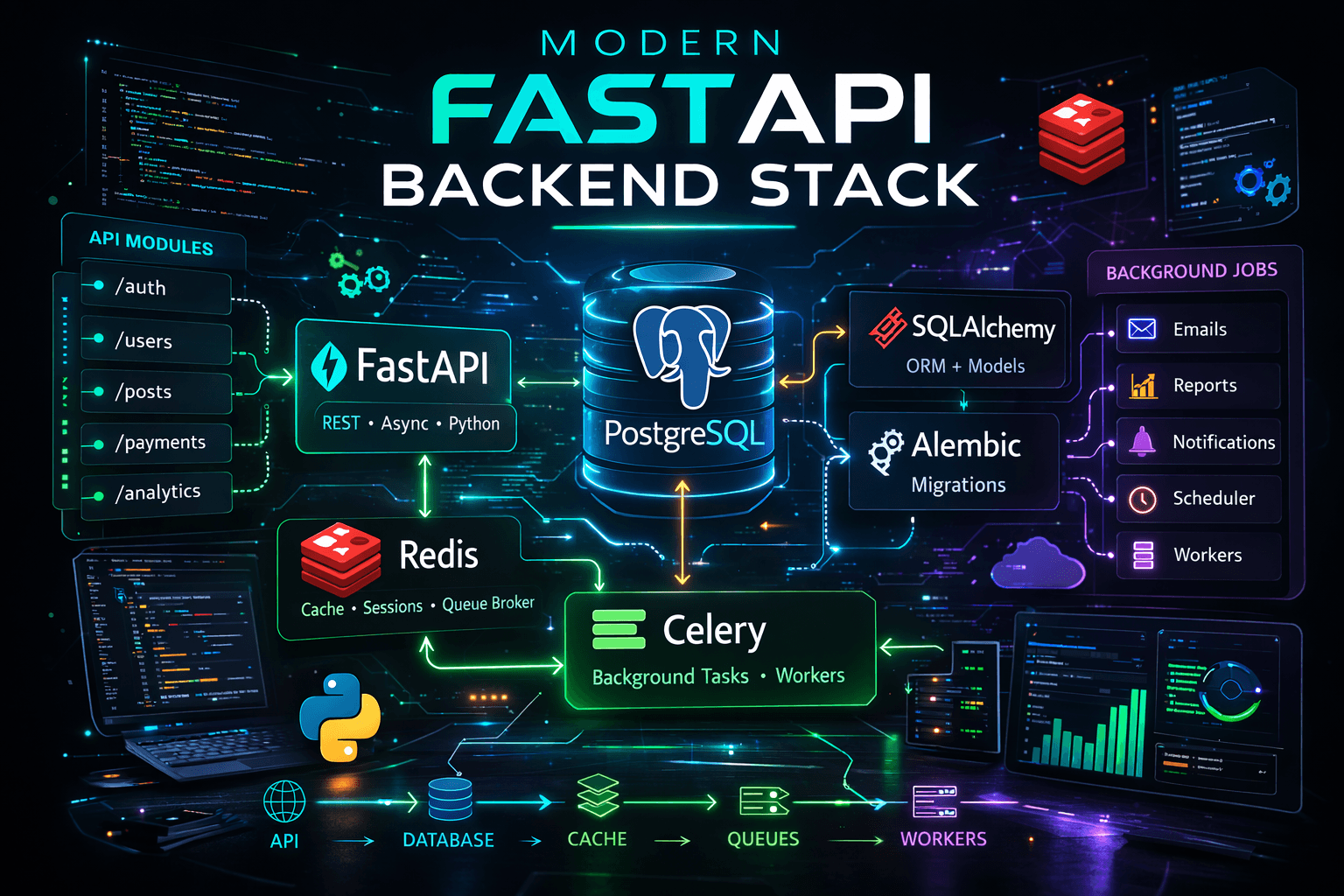
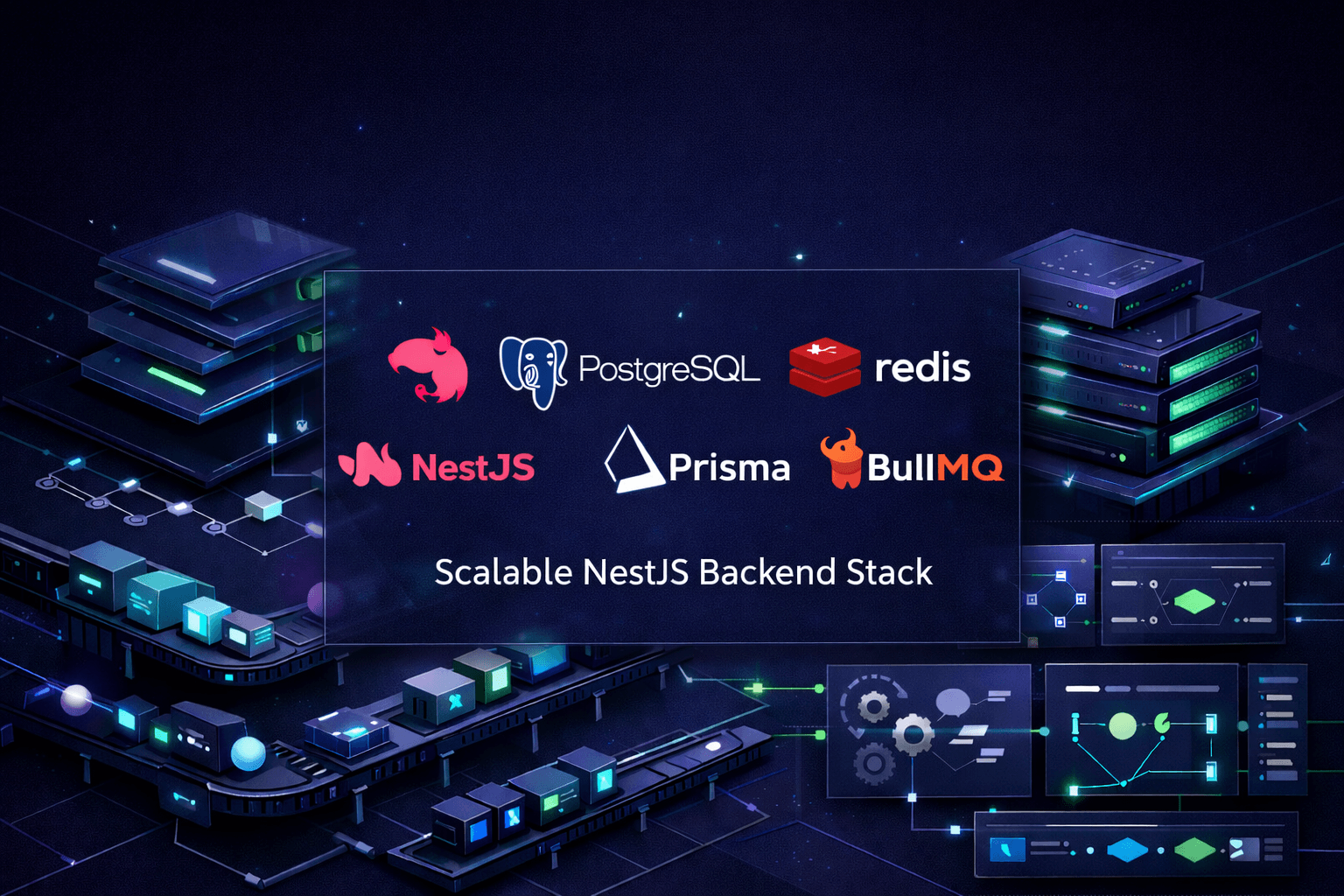
Modern FastAPI Backend Stack vs Scalable NestJS Backend Stack
A practical comparison between two strong backend approaches: FastAPI for speed, clarity, and Python-first development, versus NestJS for modular architecture, TypeScript-heavy teams, and long-term scalability.
Verdict
Choose Modern FastAPI Backend Stack if you want fast API development, strong alignment with Python, and a backend that fits especially well with AI, automation, and data-driven products. Choose Scalable NestJS Backend Stack if you want a highly structured TypeScript architecture, stronger out-of-the-box organization for large teams, and a backend foundation that scales cleanly as your application grows. FastAPI feels lighter and faster early on, while NestJS usually offers better architectural guardrails for long-term team development.
Overview
Modern FastAPI Backend Stack and Scalable NestJS Backend Stack are both excellent backend approaches, but they solve different kinds of problems with different philosophies.
The FastAPI stack usually means FastAPI, PostgreSQL, SQLAlchemy, Alembic, Redis, and Celery. It is an excellent choice for Python-first teams, API-focused products, automation systems, and backend services that may eventually connect to AI, machine learning, or data workflows. It feels modern, typed, productive, and very clean.
The NestJS stack usually means NestJS, PostgreSQL, Prisma, Redis, and BullMQ. It is a stronger fit for TypeScript-first teams that want a more structured architecture from the beginning. NestJS is especially attractive for SaaS products, modular business platforms, and larger backends where consistency, maintainability, and clear module boundaries matter a lot.
This comparison is not about hype. That road is full of smoke. It is about choosing the stack that best matches your team, your product, and the complexity you expect to handle over time.
Core Philosophy
FastAPI is designed for speed, clarity, and developer productivity. It feels direct and sharp. You define models, validation, and routes with minimal friction, and the framework gives you a clean developer experience almost immediately.
NestJS is designed around structure. Modules, controllers, services, providers, and dependency injection are part of the framework’s identity. That extra architecture can feel heavier at first, but it becomes very valuable as the application grows and more developers touch the same codebase.
In simple terms, FastAPI is usually the elegant blade. NestJS is usually the reinforced shield.
Developer Experience
FastAPI is often easier to enjoy early. It has a very smooth development flow, especially if your team already knows Python well. It is fantastic for quickly exposing APIs with validation, documentation, and modern asynchronous support.
NestJS asks for more structure from day one. It may feel more ceremonial at first, but that ceremony is not there for decoration. It helps keep large applications clean, predictable, and easier to reason about when the codebase starts becoming serious.
If your team loves Python, FastAPI feels natural. If your team lives in TypeScript and wants consistency across backend development, NestJS feels like home.
Architecture and Scalability
FastAPI gives you flexibility. That is a blessing when moving fast, but also a trap if your team has weak discipline. Without clear boundaries, a FastAPI codebase can become messy over time. The framework does not force a strong architecture as much as NestJS does.
NestJS is stronger by default for modular backend design. Its structure helps teams separate domains, build service layers, organize dependencies, and keep the application maintainable as complexity grows.
Both stacks scale in production. The difference is less about raw technical scalability and more about organizational scalability. NestJS usually scales better across larger teams. FastAPI scales beautifully too, but it needs intentional architecture and discipline.
Database and Persistence Layer
The FastAPI stack commonly uses PostgreSQL with SQLAlchemy and Alembic. This combination is mature, flexible, and powerful. It gives experienced developers a lot of control, but it can feel heavier for people who want a more guided and type-safe workflow.
The NestJS stack commonly uses PostgreSQL with Prisma. Prisma is one of the cleanest ORM experiences for TypeScript teams. It offers a schema-driven workflow, strong type safety, and a very comfortable developer experience for teams building modern backend systems.
If you value flexibility and Python maturity, the FastAPI side is strong. If you value developer ergonomics and type-safe workflows in TypeScript, the NestJS side usually feels smoother.
Background Jobs and Async Work
FastAPI often pairs with Redis and Celery for background jobs. Celery is well known and powerful, especially in Python-heavy ecosystems, but it introduces operational complexity. Workers, brokers, retries, and monitoring are real concerns, not decorative words people throw into architecture diagrams to look expensive.
NestJS often pairs with Redis and BullMQ. This fits very naturally inside Node and TypeScript ecosystems. BullMQ is a strong choice for jobs such as emails, notifications, imports, exports, scheduled processes, and other background work.
Both solutions are solid. The better one usually depends on whether your team is primarily Python-oriented or TypeScript-oriented.
When FastAPI Wins
FastAPI is usually the better choice when you want to move quickly, build a clean API layer, integrate with Python-based tools, or support products tied to AI, automation, analytics, or data-heavy workflows. It is also a great fit for smaller teams or solo developers who want strong output with less ceremony.
When NestJS Wins
NestJS is usually the better choice when your team is deeply invested in TypeScript, expects the backend to grow in complexity, and wants stronger architectural conventions from the start. It is excellent for SaaS systems, internal platforms, enterprise-style services, and larger applications with many modules and responsibilities.
Trade-Offs
FastAPI can become too loose if developers do not enforce patterns intentionally. That freedom is nice until the code starts smelling like a forgotten alley behind production. NestJS solves that with structure, but the trade-off is more boilerplate and more framework ceremony.
FastAPI tends to feel faster early. NestJS tends to feel safer later.
Final Verdict
Choose Modern FastAPI Backend Stack if you want speed, clarity, Python ecosystem power, and a backend that works especially well for modern APIs, automation, and AI-adjacent systems.
Choose Scalable NestJS Backend Stack if you want strong architecture, modular TypeScript development, and a cleaner long-term foundation for larger backend systems.
My honest take is simple. If I were building fast with a small team, especially around AI, automation, or data, I would lean FastAPI. If I were building a long-lived SaaS platform with multiple developers, many modules, background jobs, permissions, and long-term scale in mind, I would lean NestJS.
FastAPI is the swift river. NestJS is the stone cathedral.